
New phone system arriving Thursday 10 September – calls may be briefly disrupted at both branches.
If you can't reach us, use the live chat on this site or email reception@fentonvets.co.uk and we'll call you back.
How to interact with your cat the friendly way
Cats show affection differently to dogs. A slow blink, a gentle head nudge or simply choosing to sit near you are all signs of trust and contentment. Understanding how your cat communicates – and how to interact with them on their terms – makes a real difference to their wellbeing.
Let your cat take the lead
The most important thing to know is this: always let your cat choose whether to interact. Cats feel safest when they're in control of a situation. If your cat approaches you, that's an invitation. If they walk away, respect it.
A useful rule is the three-second pause – stroke your cat for a few seconds, then stop and wait. If they nudge into your hand or stay close, they're happy to continue. If they move away or show any signs of tension, leave them be.
Where to stroke your cat
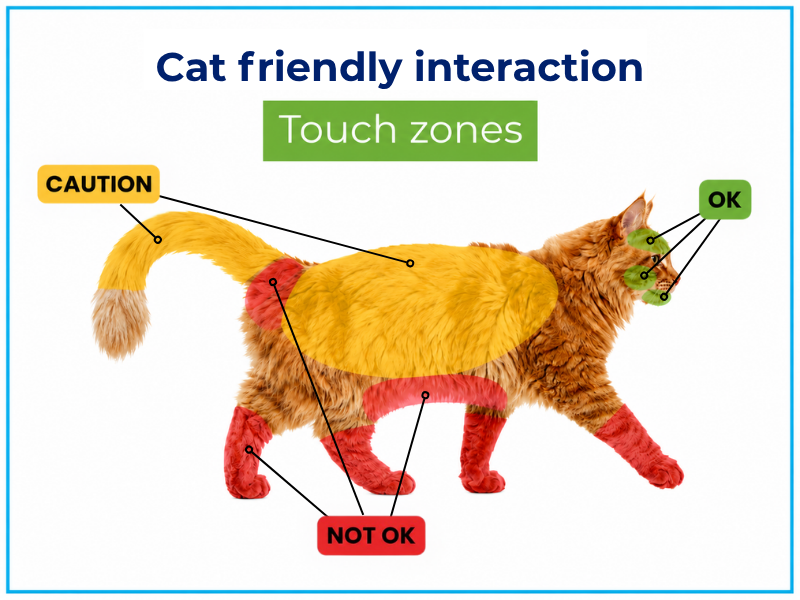
Cats generally enjoy being stroked around the head, cheeks and the base of the ears – areas they use to scent-mark things they're comfortable with. Areas like the belly and the base of the tail can be sensitive and are best avoided, especially with cats you don't know well.
Use the interactive guide below to explore the touch zones on your cat.
Signs your cat is comfortable
- Slow blinking or half-closed eyes
- Purring
- Nudging your hand with their head
- Kneading with their paws
- A relaxed, upright tail
Signs your cat wants space
- Turning their head away
- Tail flicking or thumping
- Skin twitching along the back
- Flattened ears
- Moving away from you
The C-A-T method
A simple way to remember how to approach interaction:
- C – choose to let the cat initiate contact
- A – ask by offering a hand for them to sniff before stroking
- T – touch only in preferred areas, then pause and check
Making mealtimes and handling easier
Cats that are regularly handled gently from a young age tend to be more relaxed at the vets and in new situations. Short, positive interactions at home – particularly around feeding time – help build trust and make stressful situations easier for everyone.
If your cat seems unusually tense, withdrawn or reactive, it's always worth a chat with our team. Sometimes changes in behaviour can be an early sign that something isn't quite right.
If you have any questions or concerns, don't hesitate to get in touch with our team — we're always happy to help.
This article was inspired by guidance originally published by International Cat Care (iCatCare), a leading authority on feline health and welfare. We're grateful for the excellent resources they provide to cat owners and veterinary professionals worldwide.