
Introducing your cat to their new home
Bringing a new cat home is exciting – for you, at least. For your cat, it's a move to a strange place full of unfamiliar sights, sounds and smells, away from everything they know. Cats are creatures of territory and routine, so even the friendliest feline needs time to decide that your home is now theirs.
The good news is that with a little preparation and plenty of patience, most cats settle in beautifully. Here's how to help yours feel at home.
Before they arrive
Set up a room just for your new cat – somewhere quiet, away from the busiest parts of the house. Kit it out with:
- Food and water bowls – positioned well away from the litter tray, as cats are fussy about that (and rightly so)
- A litter tray
- A comfy bed
- A scratching post
- Toys
- At least one good hiding place, such as a box on its side or a gap behind a chair
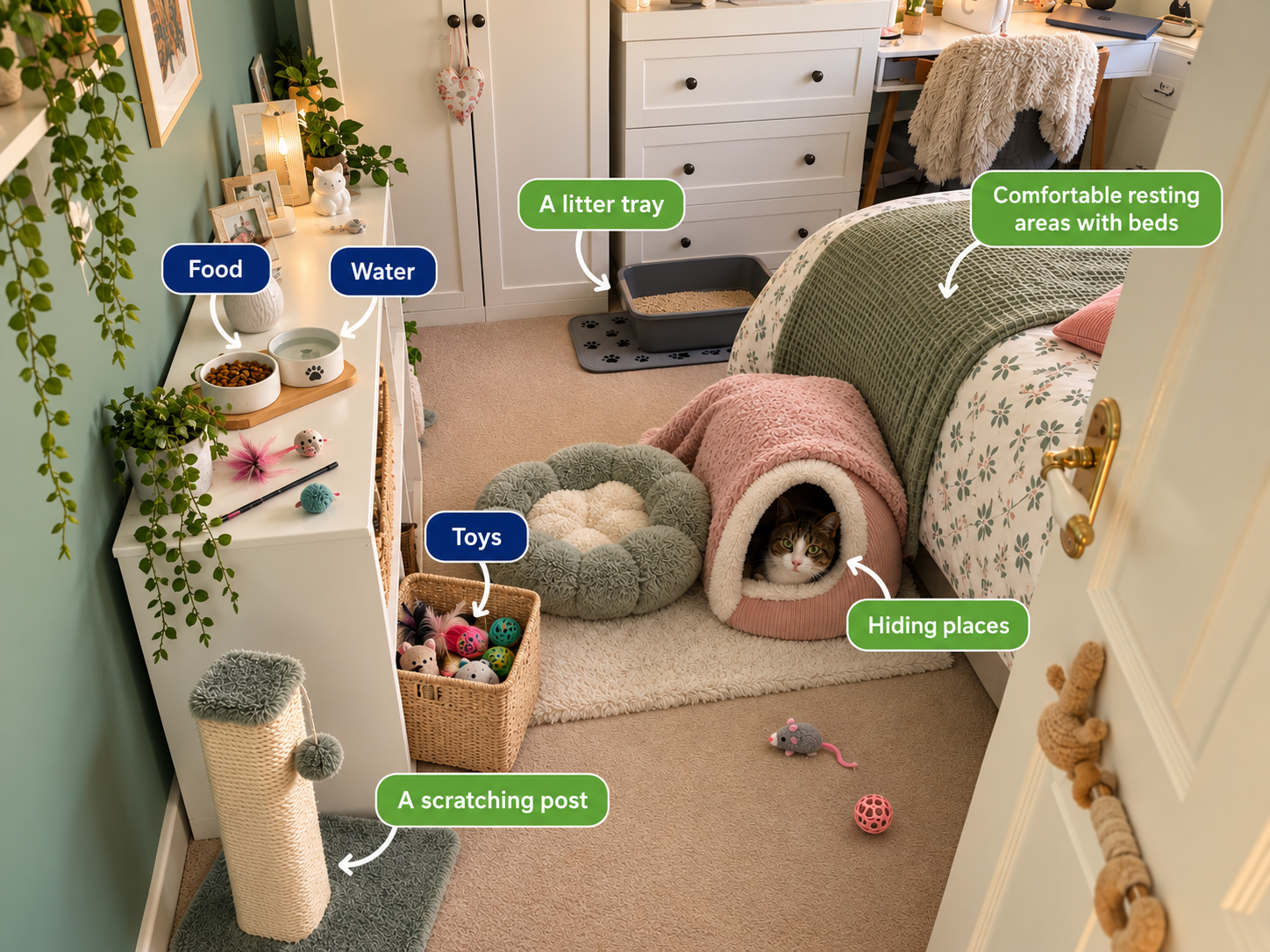
Where you can, use new items or ones that came with your cat, rather than hand-me-downs that smell of other pets. A synthetic feline pheromone diffuser, plugged in before they arrive, can also help take the edge off – ask us about these if you'd like to know more.
The first few days
When you get home, put the carrier in their room, open the door and let your cat come out in their own time. Resist the urge to lift them out or crowd round – the kindest welcome is a quiet one.
Let them stay in this one room until they seem relaxed. They'll spend the time building a mental map of their new territory and spreading their scent by rubbing their face and body on the furniture – that's a cat's way of making a place feel like home. Depending on the cat, this can take a few days or a couple of weeks.
You'll know they're settling in when they:
- Come to greet you when you enter the room
- Eat and drink well
- Use the litter tray normally
- Show an interest in play
Meeting the family
Let your cat make the first move. Sit quietly in their room, offer a hand to sniff and let them decide when to approach – a cat who chooses to say hello will relax far quicker than one who's pursued around the house. Speak softly, keep movements slow and save the big cuddles for when they're ready.
With children, a little coaching goes a long way:
- Show them how to stroke gently
- Teach them to leave the cat alone when they're eating, sleeping or hiding
- Keep early meetings short, calm and one or two people at a time – a welcoming committee is a lot for a new cat to take in
Exploring the rest of the house
Once your cat is confident in their room, open the door and let them explore at their own pace, one area at a time if that helps. Keep escape routes back to their room clear – knowing they can retreat to safety is what gives a cat the confidence to venture out.
Keep doors and windows closed for now, and save any trips outside until they're fully settled, microchipped and neutered – we're happy to advise on when the time is right.
Don't be surprised if they vanish under a bed for a while or take a few steps forward and a few back. Moving house is a big deal for a cat – think weeks rather than days, and let them set the pace.
What about other pets?
If you already have a cat or dog at home, introductions need extra care and a step-by-step approach of their own – keep the new arrival's room as their safe base and take things slowly. Have a chat with us before the big meeting and we'll talk you through it.
We're here to help
Give us a call if your new cat is struggling to settle – for example, if they're:
- Hiding constantly, even after a couple of weeks
- Not eating or drinking
- Toileting outside the litter tray
- Showing other signs of stress, such as over-grooming
As a gold standard Cat Friendly Clinic we understand what makes cats tick, and our dedicated Cat Advocates, Lisa Phillips in Haverfordwest and Rose Kelly in Pembroke Dock, are always happy to talk through any cat-related queries. It's also worth booking a health check for any new arrival, so we can make sure vaccinations, microchipping and parasite protection are all up to date.
If you have any questions or concerns, don't hesitate to get in touch with our team, we're always happy to help.
This article was inspired by guidance originally published by International Cat Care (iCatCare), a leading authority on feline health and welfare. We're grateful for the excellent resources they provide to cat owners and veterinary professionals worldwide.