
Helping your cat drink more water
Cats can be quite particular about their drinking habits. Some happily drink from their water bowl, while others would much rather have a sip from a dripping tap or a puddle in the garden!
Making sure your cat drinks enough water is important for their health. It's especially helpful for cats with kidney disease, who are more prone to dehydration, and cats with feline idiopathic cystitis (FIC), where producing more dilute urine can help reduce flare-ups.
The good news is that a few simple changes can encourage your cat to drink more. Here's what you can try.
Choose the right water bowl
Believe it or not, the type of bowl you use can make a difference. Cats have their own preferences, so it's worth trying a few options to see what yours likes best.
Try different materials – many cats prefer ceramic, glass or metal bowls rather than plastic ones.
Go for wide, shallow bowls – cats generally don't like their whiskers touching the sides, so a wider bowl can make drinking more comfortable.
Keep the bowl full – filling it close to the brim means your cat doesn't have to lower their head too far to drink.
Try a different container – some cats enjoy drinking from a tumbler or glass. Just make sure it's sturdy and won't break or tip over.
For older cats or those with joint problems, raising their water bowl slightly off the floor may also make drinking more comfortable.
Give your cat plenty of places to drink
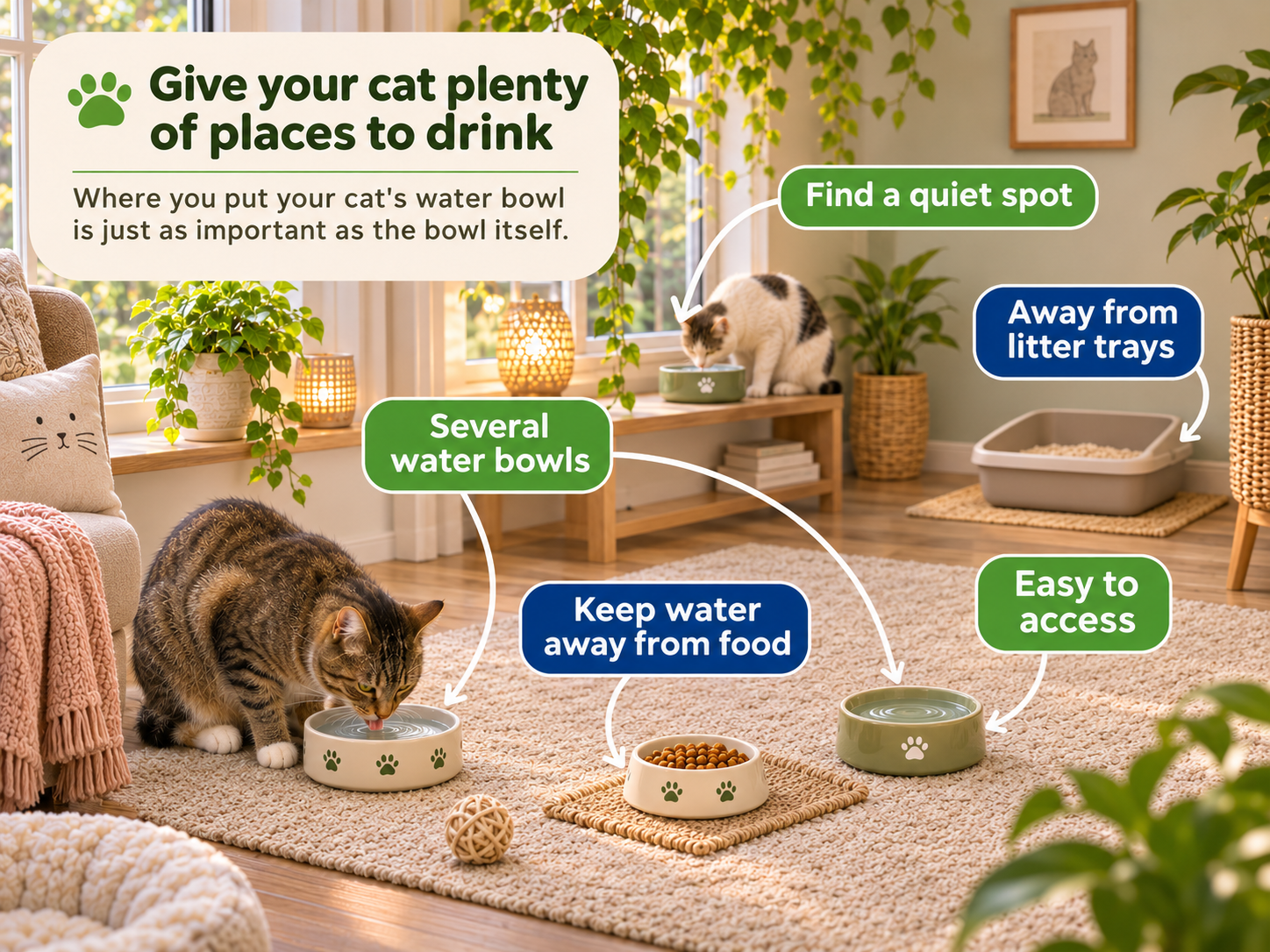
Where you put your cat's water bowl is just as important as the bowl itself.
Try placing several water bowls around your home, ideally with at least one on each floor. If you have more than one cat, aim for at least one water bowl per cat, plus an extra, spread around the house.
A few things to keep in mind:
Keep water away from food – cats generally prefer to eat and drink in separate places, so avoid combined food and water bowls.
Find a quiet spot – away from busy doorways, noisy appliances and areas with lots of foot traffic.
Keep water away from litter trays – cats prefer their drinking water well away from where they go to the toilet.
Make it easy to access – choose somewhere your cat feels safe and can see what's happening around them.
Try running or moving water
Ever caught your cat drinking from the bathroom tap instead of their perfectly good water bowl? You're certainly not alone!
Some cats are naturally drawn to moving water, so you could try:
A pet water fountain – the movement can encourage some cats to drink more. Introduce it gradually and remember to clean it and change the filter regularly.
A dripping tap – some cats enjoy drinking directly from a tap.
A shallow amount of water in the bath or shower tray – just make sure it's clean and free from cleaning product residue.
A floating ping pong ball – pop one into a wide bowl of water. Some cats enjoy playing with it, and the movement may encourage them to drink.
Experiment with different types of water
Just like us, cats can have preferences when it comes to the taste and temperature of their water.
Some are perfectly happy with tap water, while others might prefer:
Filtered water
Still bottled or mineral water
Fresh rainwater collected in a clean container
Water served at room temperature rather than cold
If your cat enjoys drinking outdoors, make sure any water you offer is fresh and hasn't been contaminated by fertilisers, pesticides or other chemicals.
Add a little flavour
If plain water isn't doing the trick, adding a little flavour might make it more appealing.
You could try:
Water left over from poaching plain chicken or fish, without salt or seasoning
A little liquid from a tin of tuna in spring water
Plain cooked fish, prawns or meat blended with water to make a thin soup
A few things to avoid:
Salty liquids, including brine, stock and gravy
Milk, which can cause diarrhoea and is particularly unsuitable for cats with kidney disease because of its phosphate content
Anything containing onions or onion powder, as these are toxic to cats
Always check with your vet before introducing flavoured liquids if your cat has an existing health condition.
Add more moisture to their meals
Another way to increase your cat's water intake is through their food.
Wet food, such as tins and pouches, contains much more moisture than dry biscuits. If your cat currently eats dry food, switching to a wet diet may help them take in more water.
You can also try adding a little room-temperature water to their usual wet food. Some cats are perfectly happy with a slightly soupy meal! If your cat prefers dry food, you could try adding a small amount of water to that too.
Just remember to check with your vet before changing your cat's diet, particularly if they have an existing medical condition. Any changes should be introduced gradually, and it's important that your cat continues eating enough.
Take things slowly
Cats aren't usually fans of sudden changes, so don't worry if yours doesn't take to a new bowl or water fountain straight away.
Give them time to investigate, keep their usual water available and try different options until you find what works.
Whatever your cat prefers, always make sure fresh, clean water is available and wash their water bowls regularly, ideally every day.
We're here to help
If you're worried your cat isn't drinking enough, or you've noticed they're suddenly drinking much more than usual, it's worth getting in touch. Changes in drinking habits can sometimes be a sign of an underlying health problem.
Never try to force water into your cat's mouth using a syringe, as this can be stressful and potentially dangerous.
As a gold standard Cat Friendly Clinic, we understand that every cat is different. Our team are always happy to help, and you can also chat to our dedicated Cat Advocates, Lisa Phillips in Haverfordwest and Rose Kelly in Pembroke Dock, if you have any cat-related questions.
If you have any questions or concerns, don't hesitate to get in touch with our team, we're always happy to help.
This article was inspired by guidance originally published by International Cat Care (iCatCare), a leading authority on feline health and welfare. We're grateful for the excellent resources they provide to cat owners and veterinary professionals worldwide.